Lost for Words

There is a word in Portuguese that can’t be succinctly translated into English. Saudade describes a sense of melancholy: a poignant nostalgia, a longing for someone or something that may never return.
It’s an apt way to describe how I felt at the news of Chris Rea’s passing in the week before Christmas 2025. As a keen fan of his music since 1987, it affected me every bit as much as you might expect.
Saudade was also the title of a piece of music written and performed by Rea in 1994, as a tribute to Ayrton Senna, the Brazilian motor racing driver who died in May of that year.
That sense of yearning — of absence, of something essential being just out of reach — feels strangely appropriate when thinking about how Rea has often been discussed, both during his career and now in the wake of his death.
He was successful, and yet constantly overlooked and misunderstood.
Writing his obituary for The Guardian, Ben Beaumont-Thomas devoted well over 700 words to summing up Chris Rea’s career and achievements — yet neither “guitar” nor “guitarist” appeared once. We got the potted insight into his early life, the obligatory list of his most well-known albums and hit singles, and, predictably enough, several mentions of his seasonal masterpiece, ‘Driving Home For Christmas’.
What was missing, however, was any attempt to portray a man who wanted nothing to do with the notion of ‘celebrity,’ yet found himself in a world where a successful musician has to be marketed and promoted as such — and where craft is too easily flattened into brand.
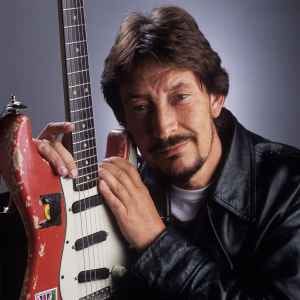
At heart, Rea loved the blues, and it was this that informed just about every song he ever wrote. Blues records don’t sell in great numbers, however, and for that reason he was repeatedly encouraged to make his music more suitable for the pop market. This he did reluctantly, but it was his brush with pancreatic cancer in the 1990s that brought about a change of heart.
As mentioned in a number of his obituaries, he underwent major surgery to have his pancreas, small intestine and much of his stomach removed. What was not so well reported was the effect this was to have on his career — and on his artistic priorities. In the light of so much illness, he vowed that if he were to recover fully, he would make music that was the blues to the exclusion of everything else. This he did, largely by setting up his own record label, Jazzee Blue.
What followed was a period that should have seen a significant uplift in the popularity of blues music, based on Chris Rea’s output alone. After a few early album releases that showed an intent to produce accessible, commercially viable music, he produced what I believe to be his magnum opus, the 2015 box set, Blue Guitars.
It consists of 11 CDs that tell the story of the blues from origin through to different eras influenced by country music, gospel, Motown, Celtic and Irish music, right through to the sounds of the 1960s and 70s. For someone like myself who knew next to nothing of blues music before, this was nothing short of a revelation. Rea clearly understood the subject matter and presented it in a form that everyone could understand.
This should have been the point when the perception of Chris Rea as one time MOR foot soldier changed to being that of a blues Renaissance Man, but for some reason it wasn’t. Instead, we, the music consuming public, not to mention the press, fell back on what we knew best - ‘Chris Rea, the gravelly-voiced singer of Driving Home For Christmas and The Road to Hell.’
Not much of an obituary for a guitarist who had a distinctive sound, a memorable voice and an admirable belief in music above celebrity persona. Perhaps there will be those who wonder what they missed out on while Chris Rea was alive. Should they choose to find out more about the man and his incredible musical talent after his passing, they will surely not be disappointed.